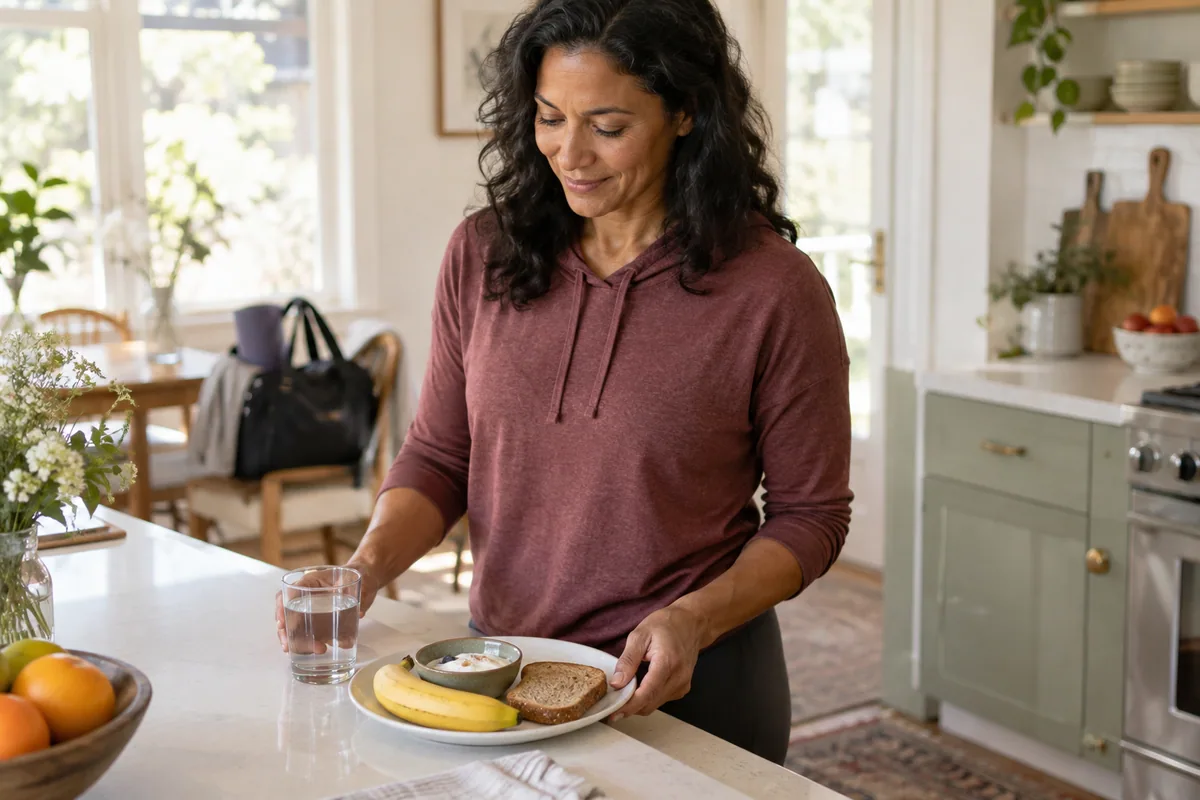
If you are hungry before barre, choose a familiar snack that fits the time you have and your usual eating pattern. A special pre-workout product is optional. You may already feel comfortable after your regular meal.
For exercise lasting less than an hour, Mayo Clinic’s eating and exercise guidance says a snack soon beforehand may help with hunger even when it adds little immediate workout energy.
When should you eat?
Mayo’s general starting guidance is to allow about 3–4 hours after a large meal, or 1–3 hours after a small meal or snack. It also notes that some people tolerate a small snack closer to exercise. Use those windows as a starting point, then notice how you feel.
Your class time and last meal help make the decision practical. An evening session several hours after lunch presents a different question from a class soon after breakfast. There is no need to force the same snack into both situations.
Eight ideas to choose from
These are optional combinations, with no fixed serving size or promised digestion time. Choose ingredients you already enjoy and tolerate. Mayo lists fruit, yogurt, crackers, sandwiches, smoothies and bars among snack options; the CDC’s snack guidance also includes fruit, yogurt and whole-grain crackers or bread.
A banana
Ingredient: a banana. Swap: another familiar fruit you tolerate. Little preparation is needed; toppings are optional.
Yogurt with berries
Ingredients: your usual yogurt and berries. Swap: a familiar dairy-free product or another fruit that suits your needs.
Whole-grain crackers and cheese
Ingredients: whole-grain crackers and your preferred cheese. Swap: familiar crackers or another savory topping. Choose the amount around your hunger.
A peanut butter sandwich
Ingredients: bread and peanut butter. Swap: a familiar spread consistent with your allergy guidance. Use products you already tolerate.
An apple with nut or seed butter
Ingredients: sliced apple and your usual nut or seed butter. Swap: another fruit, or fruit alone. Follow your own allergy guidance.
A fruit smoothie
Ingredients: fruit with milk, yogurt or a familiar alternative. Swap ingredients for your usual recipe; new powders or supplements are unnecessary.
Toast with a topping you enjoy
Ingredients: bread with jam, honey or your usual topping. Swap: use what you have and tolerate; no workout-specific product is required.
A packaged granola or snack bar
Choose a bar you have tried before and read its ingredients. Swap: a familiar unpackaged snack. A fitness label does not establish tolerance.
Make the choice easier next time
Pick one familiar option rather than testing several new foods before a session. If useful, note the snack, when you ate and whether you felt hungry, comfortable or overly full. Use that information to change one practical detail next time.
Keep water within reach and leave time to prepare your class space and equipment. Food is only one part of arriving ready; a clear setup and understandable instructions matter too.
When your plan needs individual advice
Follow any existing nutrition or allergy plan. The FDA’s allergy guidance explains the importance of checking food labels. For diabetes, ask your care team how food, activity and medicines fit together; NIDDK guidance explains why those decisions can affect blood glucose.
A registered dietitian or clinician can help when symptoms, a health condition or your relationship with food make the decision difficult. This list offers choices for everyday planning rather than a treatment plan.
Plan the class as well as the snack
Browse the planned Beginner Barre format to understand the session questions to ask.
BarrePod is planning live online 30-minute group classes. The planned offer is USD $9.95 each for the first three eligible classes, then $19.95 each. The three-class introduction is exclusive to waitlist members. Other customers get one class at $9.95, then $19.95 per class. See pricing details and join the free waitlist to share your preferred times. Bookings are not open yet.
Keep exploring
Read what to expect in a live class before joining.