
🔎 Quick Answer
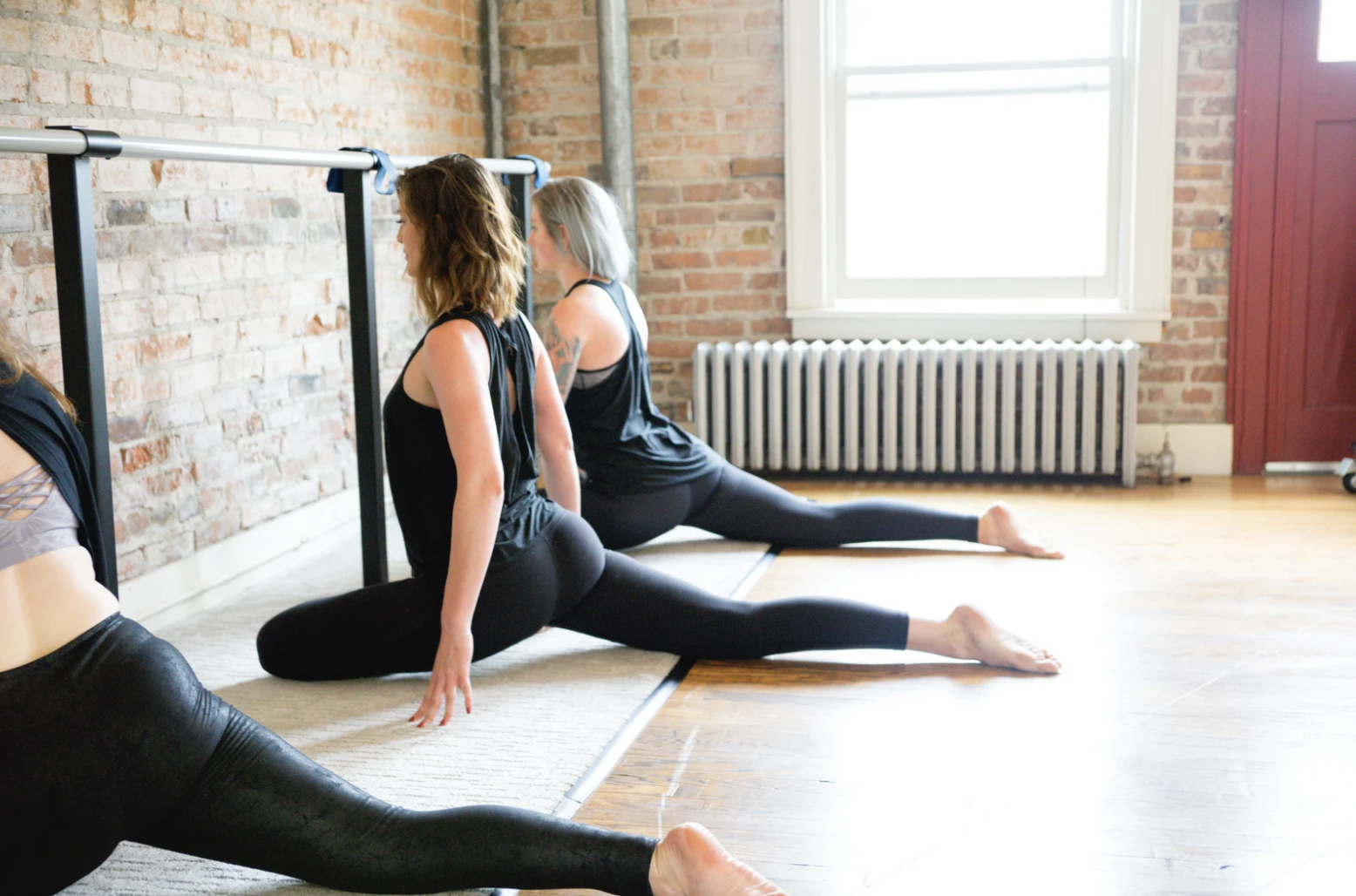
Barre workout is a low-impact, full-body fitness method inspired by ballet, strength training, and Pilates. It uses small, controlled movements, high repetitions, and precise alignment to build muscular endurance, improve posture, and increase overall strength without high impact on the joints.
What Is Barre Workout?
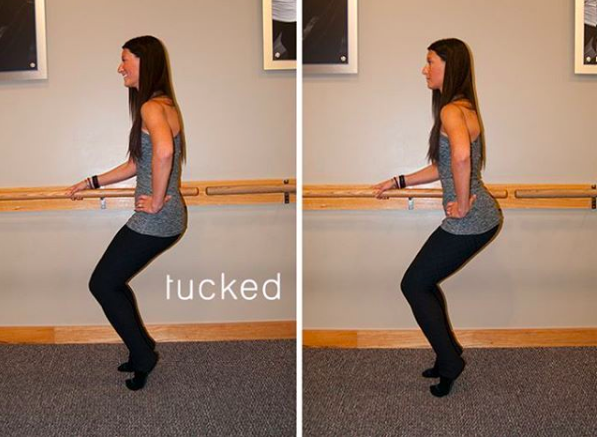
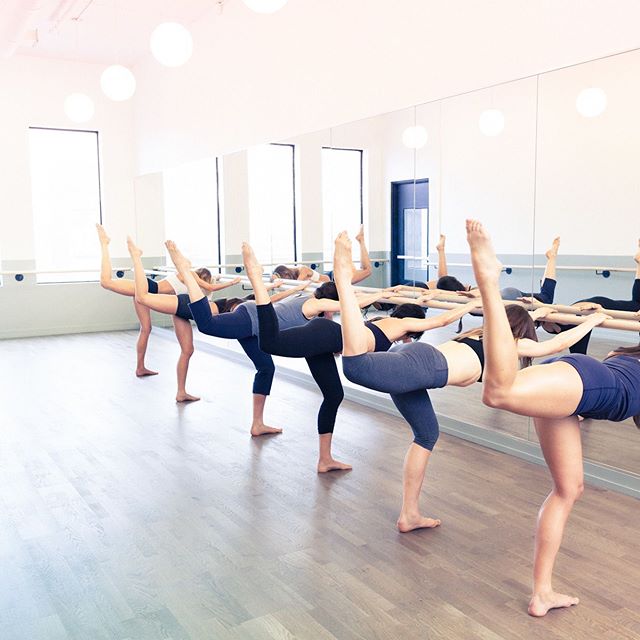
A barre workout is a structured fitness class that focuses on isometric strength training, meaning muscles are held in a contracted position for extended periods while performing small, precise movements. These movements are typically performed using a ballet barre for balance and support, along with light equipment such as resistance bands or small balls.
Despite its ballet inspiration, barre is not a dance class. You don’t need dance experience to practice barre. Instead, the method borrows principles from ballet—posture, alignment, and control—and applies them in a fitness context accessible to beginners and experienced athletes alike.
At its core, barre emphasizes:
- controlled, small-range movements
- high repetitions to build endurance
- full-body muscle engagement
- mind–muscle connection
- low-impact execution
Where Did Barre Workout Come From?
Origins of Barre Fitness
Barre fitness originated in the late 20th century as instructors began adapting ballet conditioning exercises for non-dancers. Ballet dancers have long used small, precise movements to build strength, flexibility, and balance without adding bulk.
Over time, these principles were combined with elements of Pilates and functional strength training, resulting in a workout that is structured, repeatable, and scalable for the general population.
How Ballet Influenced Barre Training
Ballet contributed:
- upright posture
- external hip rotation principles
- balance and stabilization work
- emphasis on form and alignment
However, barre workouts remove choreography and artistic performance, focusing instead on functional strength and fitness outcomes.
How Does a Barre Workout Work?
Muscle Engagement and Isometric Holds
Barre relies heavily on isometric contractions, where a muscle is activated and held under tension. This approach increases time under tension, a key factor in building muscular endurance and tone.
Small Movements and High Repetitions
Rather than large, explosive movements, barre uses micro-movements performed repeatedly. These movements target muscle fatigue efficiently while minimizing joint stress.
Mind–Muscle Connection
Barre training encourages awareness of how muscles activate and release. This focus improves coordination, posture, and long-term movement quality.
Is Barre Cardio or Strength Training?
Is Barre a Cardio Workout?
Barre is not traditional cardio like running or cycling, but many classes elevate the heart rate through continuous movement and minimal rest. This makes barre a moderate cardiovascular workout, especially when sequences are performed back-to-back.
Is Barre Strength Training?
Yes. Barre is a form of strength training that focuses on muscular endurance rather than maximal load. It builds strength using bodyweight resistance, gravity, and light equipment.
In short: barre sits between strength training and cardio, offering benefits of both without high impact.
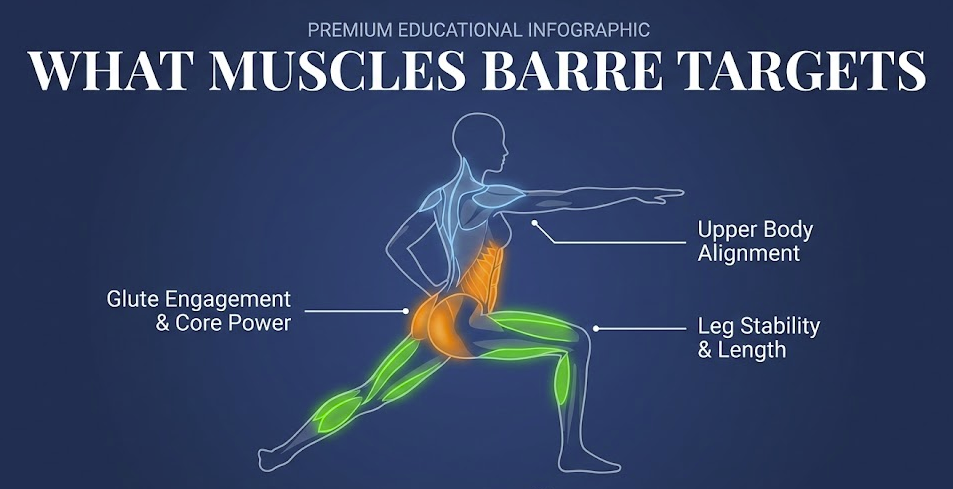
What Muscles Does Barre Workout Target?
Lower Body
- quadriceps
- hamstrings
- glutes
- calves
Core
- deep abdominal muscles
- obliques
- lower back stabilizers
Upper Body
- shoulders
- arms
- upper back
Because movements are controlled and sustained, multiple muscle groups are often engaged simultaneously.
Who Is Barre Workout For?
Beginners
Barre is beginner-friendly and adaptable. Exercises can be modified for different fitness levels, making it an accessible entry point into strength training.
People Looking for Low-Impact Workouts
Because barre avoids jumping and heavy loading, it is ideal for individuals seeking joint-friendly exercise.
Athletes and Cross-Training
Many athletes use barre as cross-training to improve balance, posture, and muscular endurance.
What to Expect in a Barre Class?
Typical Barre Class Structure
Most barre classes follow a similar structure:
- warm-up
- lower-body strength work
- core training
- upper-body conditioning
- stretching and cooldown
Equipment Used in Barre
- ballet barre or sturdy surface
- light hand weights
- resistance bands
- small exercise ball
Music, Pace, and Instruction
Classes are typically guided by an instructor who cues alignment, form, and breathing, often set to upbeat music.
Is Barre Workout Safe?
Low-Impact Benefits
Barre is considered low-impact, meaning one foot usually stays on the floor at all times. This reduces stress on joints while still providing a challenging workout.
Importance of Proper Form
As with any fitness method, correct alignment is essential. Proper barre instruction follows specific safety and alignment principles taught in professional barre education programs, such as standards used by IBBFA.
Barre vs Other Popular Workouts
Barre vs Pilates
Both emphasize core strength and controlled movement, but barre incorporates more standing work and muscular endurance training.
→ Learn more: Barre vs Pilates
Barre vs Yoga
Yoga focuses on flexibility and breath-based movement, while barre prioritizes strength, repetition, and muscle fatigue.
→ Learn more: Barre vs Yoga
Is Barre Workout Right for You?
If you are looking for a workout that builds strength, improves posture, and challenges your body without high impact, barre may be a great fit. It is adaptable, structured, and effective for a wide range of fitness goals.
To continue exploring:
- try different barre workouts
- learn about Calorie Burn at the Barre
- start with Deciding Between Barre, Pilates, and Yoga
❓ Frequently Asked Questions
Is barre good for weight loss?
Barre can support weight loss by building lean muscle and increasing overall activity levels, especially when combined with consistent practice and balanced nutrition.
How often should you do barre workouts?
Most people benefit from practicing barre 2–4 times per week, depending on fitness level and recovery needs.
Can beginners do barre workouts?
Yes. Barre is designed to be scalable and beginner-friendly, with modifications available for most exercises.
Do you need dance experience for barre?
No. Barre uses ballet-inspired principles, but no dance background is required.