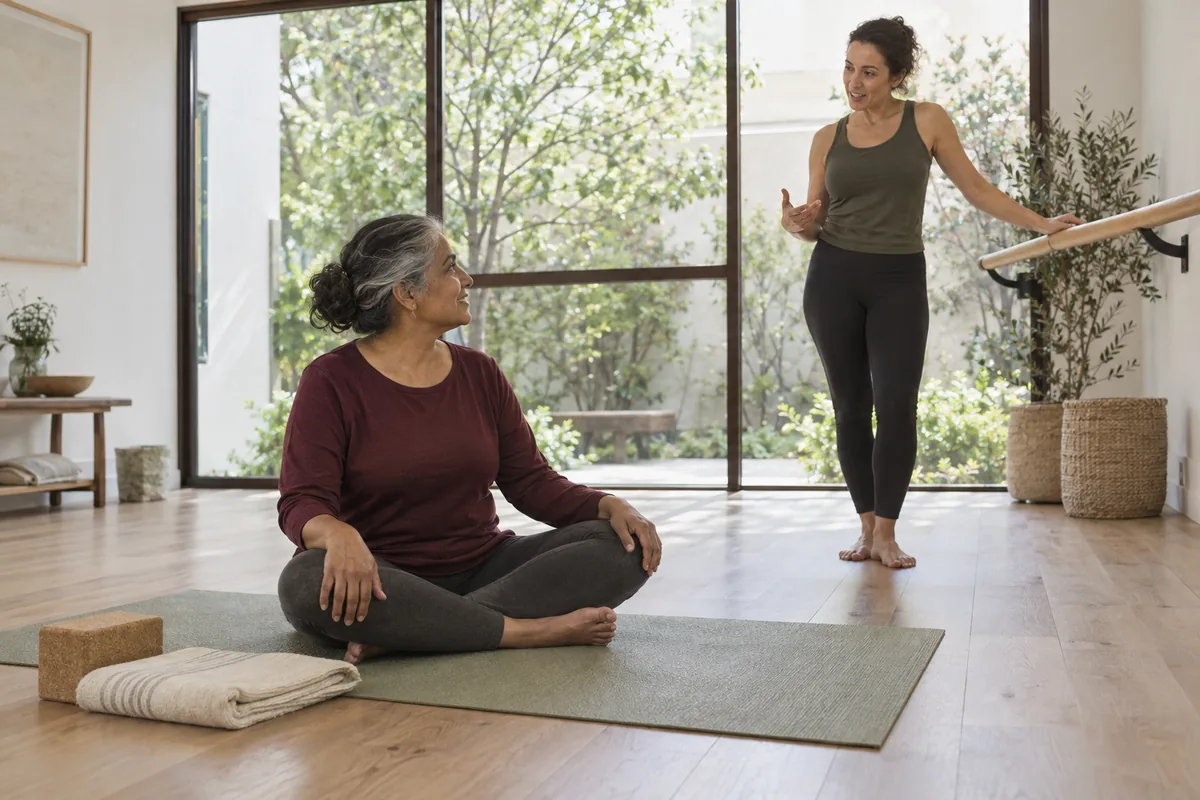
A yoga alternative should address the reason you want a change. If you dislike the pace, try a different teacher or style. If you want repeated fitness movements with music, investigate barre or dance fitness. If a movement causes pain, choosing a new brand is not a diagnosis or a treatment plan.
Yoga includes more than physical exercise. Barre may be an alternative fitness activity, but it does not replace yoga’s broader practices or every reason someone values them.
If yoga feels boring, describe what you want instead
Some people want less stillness, clearer repetition, more music or a regular group appointment. Others enjoy movement but do not want a highly choreographed class. Those are useful preferences, not evidence that yoga is ineffective.
Compare one actual session from two formats. Ask about pacing, instruction and how often the sequence changes. A different style of yoga may preserve the parts you like; a beginner barre class may offer a different exercise experience. You can combine activities without making a permanent choice between them.
If yoga hurts your wrists or knees
Do not keep repeating a painful position to finish a class. Tell the instructor which movement or transition is difficult, and seek appropriate clinical advice for new, persistent or worsening symptoms. NCCIH’s yoga guidance notes that injuries and some health conditions may call for modifications.
For class selection, turn the difficulty into a specific question: does the session require body weight through the hands, kneeling, deep knee bends or getting to the floor? A teacher can describe the session and its options. They cannot establish the cause of pain from your choice of class.
Barre can also contain planks, push-ups, knee bends and floor work. Even a standing class may involve gripping support or using weights. “Barre” and “low impact” do not mean wrist-free, knee-free or individually suitable.
If you are searching because Pilates hurts your wrists, the same class-selection questions apply: identify the position involved and ask what is actually taught. Changing from Pilates to barre does not by itself remove weight through the hands. This guide helps you discuss a format; it does not explain the medical cause of wrist pain.
Compare the movement requirements
| Requirement you want to discuss | What to ask the provider |
|---|---|
| No body weight through the hands | Are planks, push-ups or hands-and-knees positions included? |
| No kneeling | Is there a standing or seated option throughout the session? |
| No floor transitions | Can the entire class, including the finish, be completed off the floor? |
| Slower learning pace | Does the instructor demonstrate before adding repetitions? |
| Less choreography | How many movements must be remembered in a sequence? |
| Individual observation | Can the teacher see you, and when can you ask questions? |
If a requirement is essential, obtain a clear answer before booking. A general promise of modifications is less useful than an explanation of the actual alternative taught.
Barre versus yoga: compare the complete session
Use our barre versus yoga comparison for the differences in teaching, equipment and movement preferences. The question is not which label is universally gentler. It is which session matches what you want to learn and what you can comfortably do.
For a practical floor-work decision, read exercise without getting on the floor. A chair used as standing support is different from a class that remains seated.
Who may prefer to stay with yoga?
Stay if its teaching, breathing practices, community or movement approach are what you value. Ask your current instructor about another style or suitable options before replacing an activity you enjoy. For individual symptoms or restrictions, the next step may be personalized assessment rather than a group-format comparison.
Where BarrePod may fit
The Standing Barre information page explains a format to investigate if you prefer to remain off the floor. Beginner Barre is another starting point for learning the movements. Neither page offers pain treatment or confirms individual suitability.
BarrePod’s schedule is being planned. Review the planned pricing and, if the format interests you, record your class and time preferences on the free waitlist. Enrollment is closed; submitting interest does not reserve a place.
Sources
References used in this guide. Individual advice and the format of a particular class may differ.