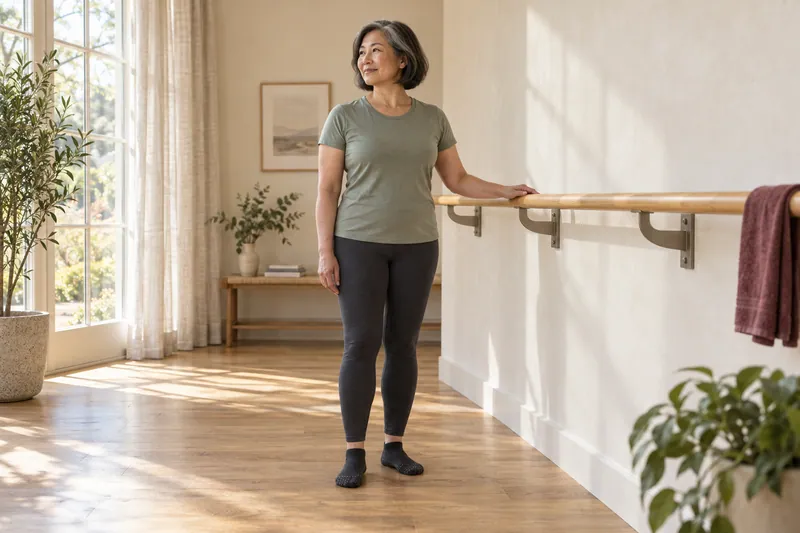
What standing means
Our Standing Barre format is planned to stay off the floor, including the warm-up and finish. It is for people who want to exercise standing; it is not an entirely seated class.
Support and balance
Standing work can include knee bends, heel raises and balance tasks. Confirm the support required and whether keeping both hands on it is an option. Standing does not mean seated.
Before choosing this format
Describe the positions you need to avoid. If remaining seated is essential, ask about an entirely seated service rather than booking a standing session.
What to check on a session listing
- The instructor’s relevant training and teaching approach.
- The date, start time and time zone.
- The complete movement format, transitions and equipment.
- The joining instructions and any individual class-fit conversation needed before booking.
Questions before your first class
What standing exercises can women over 50 do?
Standing exercise can include arms, back, trunk control and hips as well as legs. Age alone does not select the right movement or resistance. Start with the positions you can use and the tasks you want to improve, then check the actual class plan and support requirements. Avoiding the floor does not require avoiding all resistance.
Can standing barre include weights?
Yes, standing exercise can use dumbbells, bands or bodyweight, depending on the session. Ask which equipment is required and how the teacher adjusts resistance. The planned standing format does not guarantee a particular weight routine. If increasing strength is your priority, compare progression and muscle-group coverage rather than choosing by equipment size alone.
Is this an online balance class for adults over 60?
This page describes a standing barre format. It is not a dedicated balance-treatment or falls program, and age alone does not determine class fit. If your goal involves unsteadiness, dizziness or previous falls, obtain appropriate clinical advice and ask about the specific support you need. No staffed session, instructor or specialist service is implied by this page.
Can I do the whole class without getting on the floor?
Avoiding floor transitions is the intended format to discuss, including the warm-up and finish. Confirm the complete session details when an actual class is listed. A standing class still requires weight-bearing and balance; if you need to remain seated, ask for a fully seated format rather than assuming a standing class can provide it.
What should I look for before joining online?
Check the instructor’s relevant qualifications, class size, camera expectations, feedback arrangements, support requirements and a plan for technical interruptions. A remote instructor cannot provide hands-on assistance. The waitlist helps us plan formats and times; it is not an individual suitability assessment.
What is chair barre: seated exercise or standing support?
Both meanings appear in class descriptions. In supported standing barre, a chair replaces the barre while you stay on your feet. In a seated class, you exercise from the chair. Ask which arrangement the whole session uses, including its warm-up and finish. If you need to remain seated, a standing class with a chair nearby is not the same service.
Can I work my core without getting on the floor?
Standing exercises can challenge trunk control while your arms or legs move; mat exercises are not the only way to include that work. Ask what the class actually teaches, whether support is allowed and how difficulty is adjusted. Standing longer or removing support is not automatically a useful progression for everyone. If abdominal or pelvic symptoms affect your exercise, discuss those needs before choosing a generic core class.
Does a standing class require a fixed barre?
Check the session’s stated support requirements. Ask whether the instructor accepts a particular chair or another stable support and what clearance is needed around it. Do not assume that a light chair, rolling chair or furniture not intended for exercise is interchangeable with a fixed barre. The session details should make the setup clear before booking.
Can I select this format on the waitlist?
Yes. Select standing barre and add the times that would work for you. You can also choose another format that interests you. Preferences help plan demand; classes are not open for enrollment yet. If avoiding a position is essential, discuss that with the provider before accepting a future class place.
Discuss specific adaptation needs with a teacher who has relevant experience. Browse instructors listing adaptive movement training and verify their current scope directly.
Common reasons people start
Explore the question that brought you here before choosing a format.
- Exercise Without Getting on the Floor
- Quiet Workouts for Apartments and Small Spaces
- SilverSneakers Alternatives: Benefits and Class Options
- Is Barre Good for Women Over 50?
More reasons and workout comparisons
Prepare for your next class
Our barre without weights guide explains equipment choices. Check the positions separately: a no-equipment recording can still include floor work.
For bookings with an independent instructor, use their own class information, prices and policies.