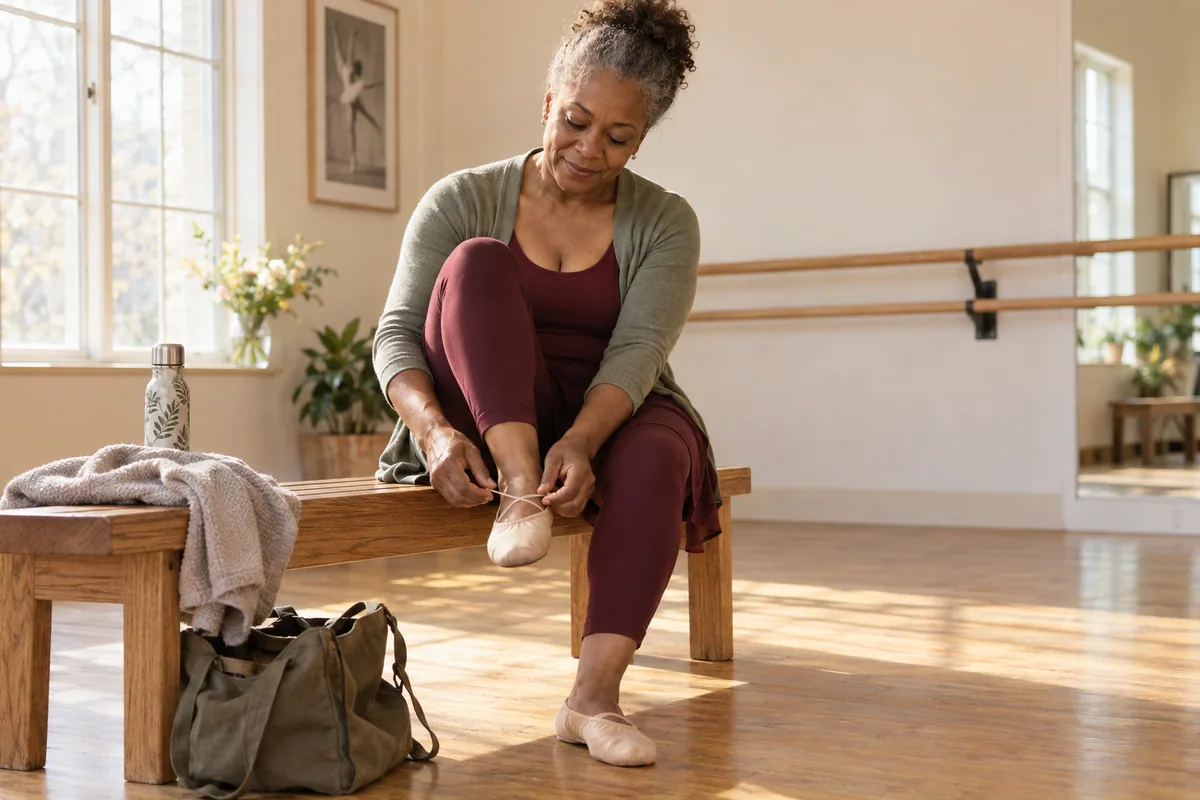
If you are getting back into ballet as an adult, start by finding a class that teaches at a pace you can use now. Tell the school what you studied, how long you have been away and what you want from returning. You can remember the vocabulary and still benefit from rebuilding the basics. Going back to a foundational class is a practical choice, not a judgment on your earlier dancing.
Is it too late to get back into ballet as an adult?
No—adult ballet teaching includes beginners and people returning after long breaks. Start at a level matched to your current skills and learning pace. Tell the school about earlier study and time away, then ask which class explains the foundations you need. Previous experience is useful context, not automatic placement.
UNCSA’s current adult-ballet descriptions explicitly welcome returners in foundational classes. They distinguish a starting class from a second beginner level and intermediate study with stronger prerequisite knowledge. That illustrates why “I used to dance” is the beginning of a placement conversation rather than an automatic intermediate entry.
On a small screen, scroll the table sideways to see all columns.
| What you want now | Ask about |
|---|---|
| Relearn positions and vocabulary | A course with explanations and repeated foundations |
| Rebuild combinations after intensive earlier study | A returner or beginner-level trial with teacher advice |
| Enjoy dance at a more deliberate pace | The actual adult-class teaching style and movement options |
| Develop technique toward a particular goal | A ballet teacher who can assess current skills and plan study |
| Exercise to music with ballet influence | Fitness barre, with a different purpose from ballet tuition |
If fitness with familiar movement ideas interests you, the planned Beginner Barre format explains the class questions to ask. It is an upcoming fitness option with a free waitlist, not a bookable ballet lesson.
How do you prepare for your first ballet class back?
Send a short history before booking: “I studied ballet for [time], stopped [time] ago and currently do [activity]. I would like to return for [goal]. Which class would you suggest, and can I try it before committing to a course?”
Then check the arrangements:
- Class structure: barre, center work, traveling combinations and any jumping expectations.
- Teaching pace: whether the instructor demonstrates and gives explanations before combinations.
- Options: how to mark a movement, take a break or ask for another version.
- Practical setup: footwear, clothing, floor, arrival time and whether a warm-up is included.
- Learning environment: how questions and corrections work for adult returners.
If you have pain, a recent injury or relevant medical restrictions, discuss return decisions with the appropriate professional and tell the teacher the guidance that affects class. A placement chat is about learning level; injury rehabilitation is a separate service.
Can you get back into ballet after 40, 50 or 60?
Yes, adult programs include older beginners and returners; age alone does not determine the right level. The Royal Academy of Dance’s Silver Swans is one example designed with older learners in mind. Choose the actual pace, teaching and movement options that fit your current experience rather than trying to match your old schedule.
The Royal Academy of Dance’s Silver Swans program welcomes older learners, including experienced dancers and newcomers. Its licensees train specifically to teach adults over 55, while all ages are welcome. It is one option to investigate in the US, alongside other adult programs; check the actual local class.
Look for a teacher who takes your current goals seriously. You do not need to look like your younger self, regain the splits or reach a particular body weight to ask about adult classes.
How do you rebuild ballet technique and flexibility?
Rebuild through current-level teaching and practice your teacher can review. Begin with clear positions, coordination and manageable combinations; let the teacher advise on between-class practice and progression. Memories of an old range do not establish today’s flexibility. Avoid forcing stretches or adding jumping simply to catch up with a former level.
Choose one focus for the next class, such as remembering the order of an exercise or understanding one correction. Ask the teacher how to judge readiness for the next level.
Boston Ballet School’s adult program includes foundation courses as well as classes at different levels. Compare a progressive course with a drop-in format if you want repeated teaching and a stable sequence of learning. Do not assume every open class is designed as a return course.
Does fitness barre help you return to ballet?
Fitness barre may be an enjoyable part of your exercise routine. It can involve repeated strength and endurance work to music, but it does not teach everything in a ballet technique class: placement, coordination, combinations, traveling steps and individual dance corrections have their own curriculum. Read our barre-versus-ballet comparison before choosing between them.
For general activity alongside dance, the CDC guidance includes aerobic exercise and strengthening all major muscle groups. Ask how your current routine covers those needs. A fitness class is a complement you can evaluate, not a substitute for your teacher’s assessment of technique or pointe readiness.
If returning follows childbirth, use the postpartum return guide for that separate recovery conversation. If you also ride, our off-horse conditioning guide similarly separates fitness from sport tuition.
Where can you find online adult ballet classes?
Check ballet schools’ current adult schedules and confirm the experience each online class assumes. San Francisco Ballet lists studio and online adult options. Ask whether the teacher can see you, how corrections work, and what floor, support and clear space you need before booking.
For more detail, use the barre-versus-ballet comparison. Its online examples are ballet teaching options to investigate, not a claim that a fitness livestream replaces a technique lesson.
What should you focus on in your first month back?
Choose a manageable class arrangement, allow time to arrive prepared and review the fit after you have attended. Keep brief notes on useful corrections and questions. Adjust the level with the teacher instead of using soreness or memories of your old schedule as the test.
BarrePod is collecting preferences on its free waitlist; booking is not open, and its planned fitness classes are not ballet tuition.
Sources
References used in this guide. Individual advice and the format of a particular class may differ.