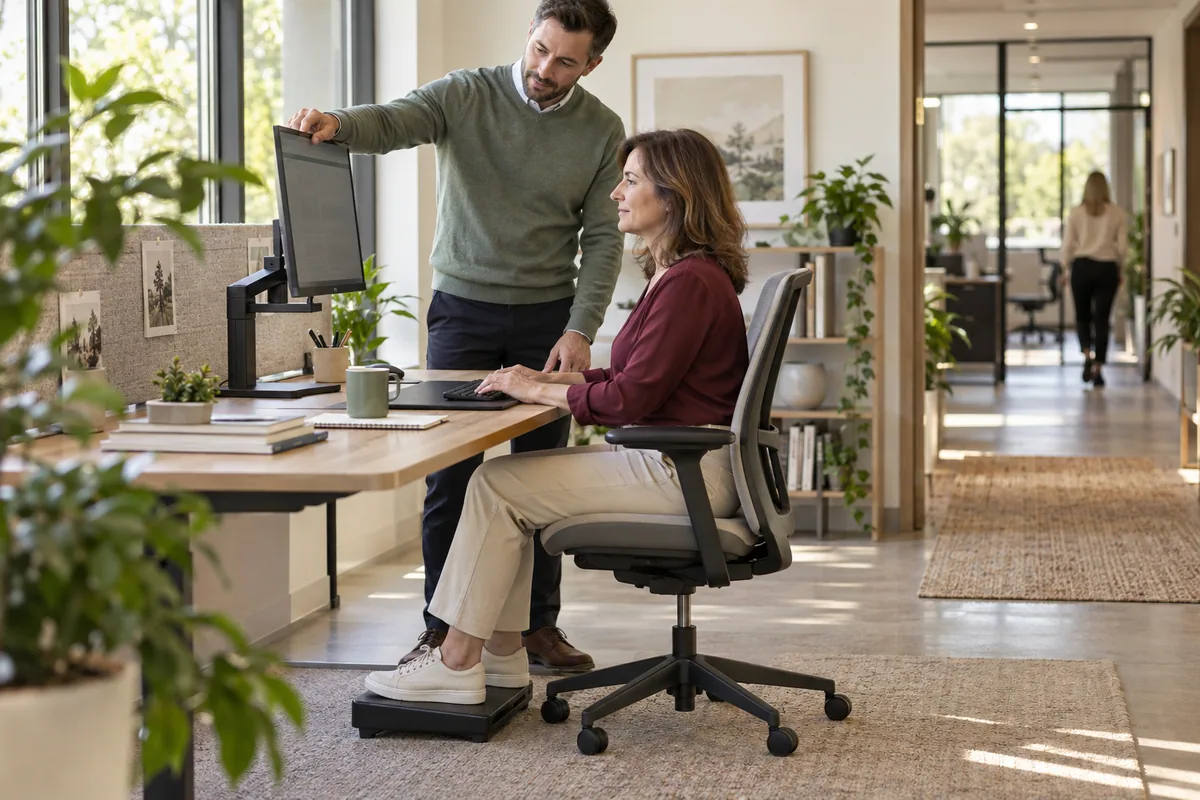
Movement and workstation design answer different questions
OSHA describes neutral positioning and encourages changing working position rather than remaining still for prolonged periods. This does not establish one posture that everyone should hold all day. The task and individual setup matter.
Match the concern to the appropriate support
An employee asking about a screen height or chair adjustment needs a different response from someone looking for an optional exercise class. Avoid treating every desk-related concern as a reason to buy the same program.
| Concern | Appropriate next question |
|---|---|
| The workstation does not fit | Who can assess the equipment and work task? |
| Long uninterrupted computer tasks | Can task variation or breaks be arranged? |
| Interest in movement skills | What instruction, practice and suitable progression are available? |
| Pain or symptoms | What appropriate clinical or occupational-health support is available? |
Assess posture claims carefully
Ask what a provider means by 'improve posture,' how the outcome would be measured and whether the evidence concerns the specific service offered. A photograph, an instructor cue or a satisfied participant does not establish a long-term clinical result.
BarreWorkout does not claim that its planned workplace offering treats injuries or corrects every employee’s posture. Our planning focus is a practical movement experience with a clear scope, supported by appropriate instructions and choices.
Build a practical employer brief
Describe the work setting, available time and desired experience. If ergonomics is the main concern, include the appropriate workplace specialist. If the aim is an optional movement opportunity, compare session types and ask about space, equipment and access.
The linked sources provide general workplace guidance. They are not an assessment of an individual’s symptoms or proof of a BarreWorkout outcome.
A practical workstation conversation
Imagine an employee who leans toward a small laptop screen during long calls. Ask the workplace’s appropriate ergonomics contact to review whether the screen is readable at the intended distance and whether the task and equipment fit.
A concise request could say: “My current screen and task setup makes it difficult to work comfortably. Who can help review the workstation and how the task is organized?”
Answer the posture question before selecting a class
If an employee asks for exercises to help posture at a desk, first clarify whether they mean a movement break, strength practice or a workstation problem. A movement class can create time to practice movement. It does not establish that a screen, chair or work task is set up appropriately, or that pain needs have been addressed.
Sources and scope
General information for employer planning. Provider descriptions are their own published offerings, not independent performance ratings. No named medical review or product test is implied.
- OSHA: computer workstation positions — Government guidance
- OSHA: work process and recognition — Government guidance
Make the next decision
Considering movement for your team?
Tell us the formats and times you would like. Corporate availability and pricing are in planning; submitting interest makes no booking.
Register employer interest →