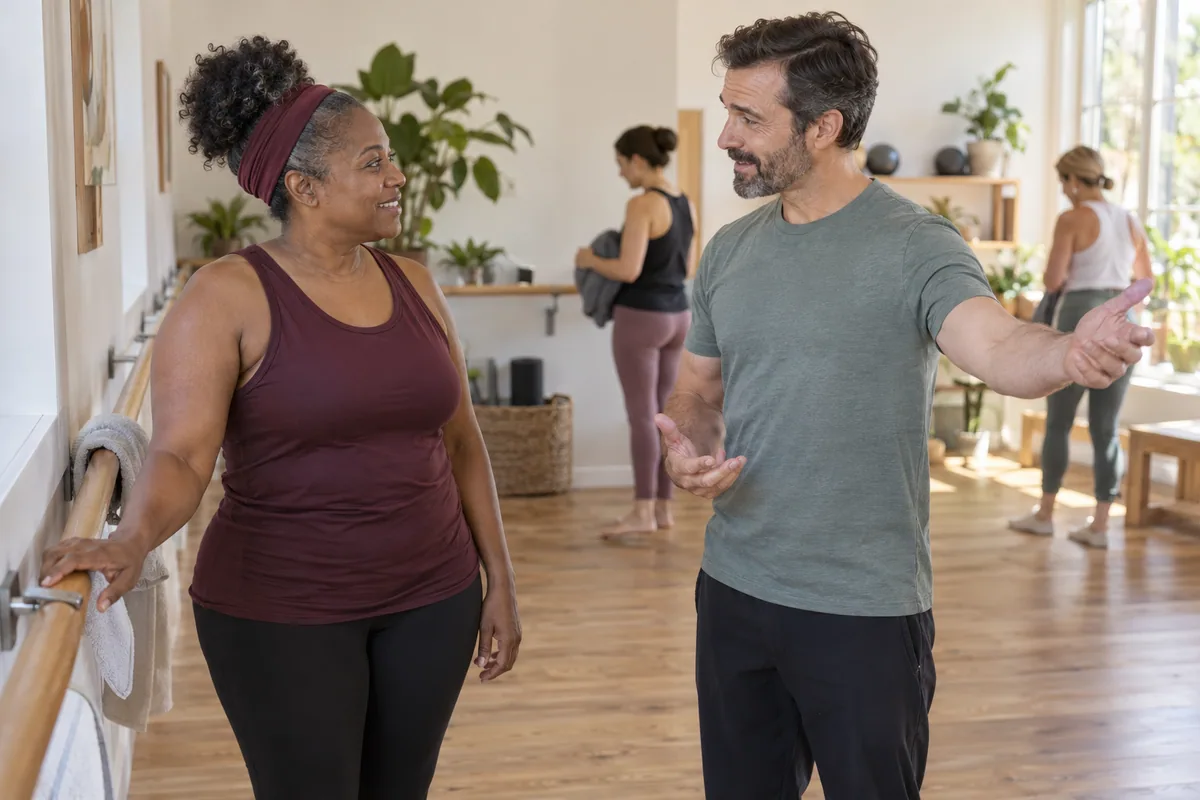
You do not need a particular body shape or dance background to explore barre. The useful question is whether a specific class gives you movements, instruction and access you can use. “For everybody” is a welcoming intention; it still needs practical details.
Start with one goal and one essential requirement. For example: “I want a regular exercise appointment, and I need to avoid getting down to the floor.” That gives a provider something concrete to answer.
Separate your goal from your class requirements
Your goal might be learning a new movement style, adding resistance work or finding an activity you enjoy enough to repeat. Your requirements might include a seat throughout, a stable hand support, captions, time to follow demonstrations or a class that avoids kneeling.
These are separate decisions. A class can fit your fitness goal yet use positions or technology that do not work for you. Equally, a convenient class may not supply the training progression you want. Our introduction to barre explains why class formats vary.
Turn a broad label into a specific question
- “Beginner”: Are starting positions and unfamiliar words explained, or is the sequence already familiar to regulars?
- “Low impact”: Does the session include jumping, fast changes of direction or demanding holds? Impact and effort are different features.
- “Chair barre”: Is the class performed sitting down, standing beside a chair, or switching between the two?
- “Adaptable”: Which alternatives are demonstrated, and when are they explained?
- “Live”: Can the instructor see participants, and how can you ask a question?
If you need to remain seated, a standing class with a chair nearby is not the same format. If you want to avoid floor transitions, confirm the warm-up and final stretches as well as the main exercises. The standing and seated format guide offers a fuller checklist.
Match the teaching to how you learn
Think about the explanations you find easiest to use. You may want a clear demonstration before movement starts, spoken descriptions of direction, a slower transition or a chance to ask a question. Tell the provider what helps rather than assuming the teacher will infer it from your age or appearance.
For an online class, ask about captions, audio, camera expectations and whether the whole body must remain visible. A recording lets you pause and replay, while a live group has a set time and its own feedback arrangements. Compare those differences in our online barre guide.
Send a short class-fit message
“I am interested in your class because [my goal]. I need [specific position, support or communication requirement]. Does the whole session fit that, including the warm-up and finish? How are alternatives taught, and can we clarify the setup before I book?”
For example, “I need more transition time” invites a more useful answer than “Is this good for older people?” Ask for specifics if the reply is simply “do what you can.” You should be able to understand the actual participation options before deciding.
Share sensitive health details through the provider’s private process when relevant, rather than in a public comment or general waitlist form. If a condition changes which activities are appropriate, use individual professional guidance alongside the class description. The CDC’s disability and activity guidance emphasizes matching activity to abilities and addressing access barriers; it does not endorse every class with an inclusive label.
Compare two actual sessions
Write down the movements and transitions, required support, instruction, time and total cost for each option. Treat anything unanswered as a question for the provider. If you cannot meet the stated setup, investigate another session rather than inventing your own version during class.
Our planned Beginner Barre, Standing Barre and Barre & Strength pages explain different starting questions. BarrePod bookings are not open; the free waitlist collects interests and preferred times. Joining does not confirm that a particular adaptation or class time will be available.
Plan the access you need
For concrete questions about captions, seated participation, communication and support, use choosing a barre class with a disability. It includes a message you can adapt before contacting a provider.
Can I take barre in a plus-size body?
You do not need to reach a target weight or body shape before exploring barre. Choose a class by its actual movements, equipment and teaching options. Being plus-size does not tell an instructor your strength, flexibility or exercise experience, and it does not mean you need a weight-loss goal.
Ask about comfortable space between participants, the dimensions and rated use of any seat or equipment, floor transitions and options that leave room for your body during bends or seated tasks. You can ask for a different position without treating the most compressed shape as the goal. For an online class, check that the camera view and demonstrations let you follow the options you need.
NIDDK’s Staying Active at Any Size guide supports choosing enjoyable activity that fits your ability and goals, with equipment that fits and appropriate advice for health concerns. If symptoms or a condition affect exercise, those deserve individual guidance; body size alone does not decide the format.
Can I join a general barre class while pregnant?
Pregnancy can change which positions, intensity and class arrangements fit you. A general class’s inclusive label does not establish prenatal suitability. Discuss exercise with your maternity professional, then ask the provider about relevant instructor training and the actual options for the whole session, including transitions and the finish.
ACOG’s pregnancy exercise guidance supports activity for many uncomplicated pregnancies and describes changes and precautions, including avoiding overheating and prolonged stillness or lying flat on the back. It does not approve every barre class. Ask how the teacher handles the guidance relevant to you; do not assume a smaller movement is the only change needed.
BarrePod bookings are not open, and this article does not announce a dedicated prenatal class or specialist instructor. Our prenatal resource guide explains how to evaluate a resource. For returning after birth, use the separate postpartum guide.