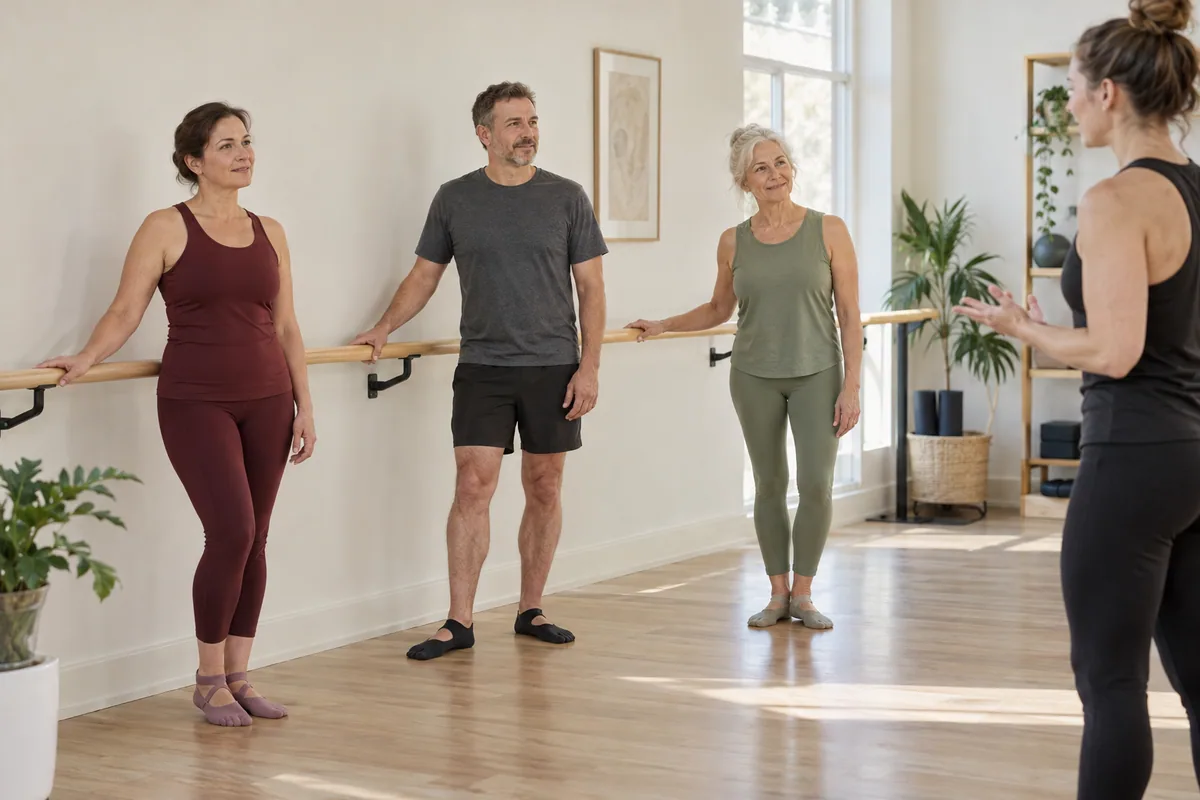
Barre fitness combines movements influenced by ballet with exercises used for strength, muscular endurance and mobility. Many classes use a barre or another stable support, but the format varies. You can learn barre without having danced before.
The name alone does not tell you the pace, amount of floor work, equipment or challenge. Before choosing a session, read what the instructor actually plans to teach. Cleveland Clinic’s introduction to barre also describes the variation between class formats.
What happens in a class
A class might include a warm-up, supported standing movements, resistance exercises, floor work and a cool-down. Some sessions stay standing throughout. Others place more emphasis on cardio, dance-inspired movement or progressively challenging strength work.
You may hear words such as plié, relevé or pulse. The instructor should explain what those cues mean for the exercise. You do not need to force a ballet position to make a fitness class worthwhile.
If you want to learn dance technique, read the difference between barre and ballet. The two can share vocabulary while teaching different skills.
Is barre enough strength training?
It can contribute, but the class name does not establish that it meets your whole strength goal. Bodyweight, bands and weights can all provide resistance. Look at which major muscle groups are challenged, whether the effort is appropriate for you and how the work develops as you improve.
For general health, the CDC recommends muscle-strengthening activity on at least two days a week, alongside aerobic activity. That does not mean any two barre classes automatically cover the recommendation. Ask the teacher about the actual program.
Use these three questions to compare a class with a dedicated strength session:
- Coverage: does the week include legs, hips, back, abdomen, chest, shoulders and arms?
- Challenge: can resistance or the exercise version suit your present ability?
- Progression: what changes when the starting version becomes easy?
A class built mainly around repeated light movements may emphasize muscular endurance. If your priority is increasing strength with progressively heavier resistance, you may want additional resistance training. Sweat, shaking and next-day soreness do not answer that programming question.
Our strength-training guide for women over 50 explains equipment choices and a simple training log. The same questions about challenge and progression are useful for adults of other ages.
What you need at home
Start with the equipment list for your chosen class. You might need a stable support, space to move, a mat or resistance equipment. Optional props should be clearly distinguished from required items.
Use the home barre equipment checklist before buying anything. Arrange your screen so that you can follow instructions without repeatedly twisting to look at it.
Choosing your first session
Look for a beginner description that explains the pace and the movements. Ask these practical questions:
- Does the session include getting down to the floor and back up?
- What support and equipment are required?
- Are options shown when a movement is unsuitable?
- For a live class, how can you ask questions and receive feedback?
A low-impact description can be useful, but it is not a personalized assessment of a class. If you have specific restrictions or symptoms, discuss the actual movements and support you need before joining.
Your next step
Compare the Beginner Barre format and planned class prices. BarrePod is accepting waitlist preferences; sessions are not open for booking. Choose a future session that lets you learn, ask questions and understand the format.