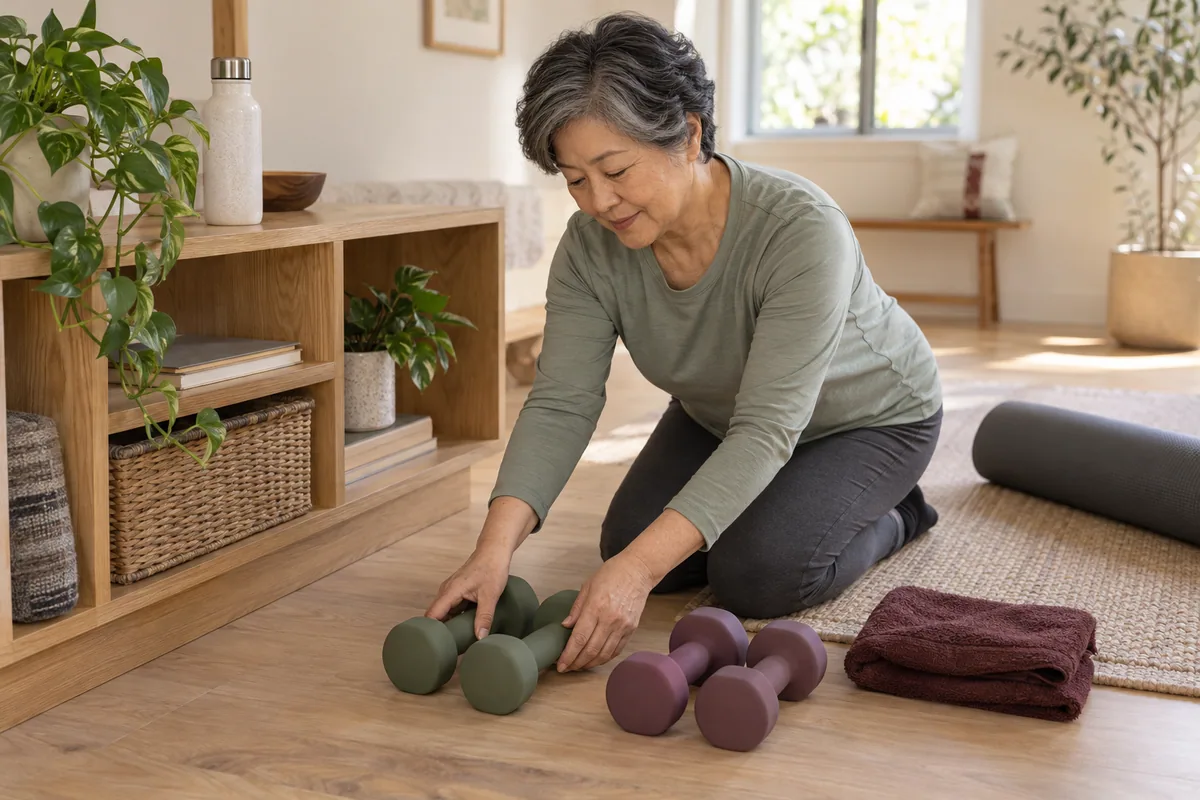
Fifty is not too late to start strength training. At home, the starting point is a manageable way to learn exercises against resistance, with enough instruction to understand the task and a plan for increasing the challenge as your abilities change.
You do not need to buy a full set of equipment before choosing that plan. First establish what you want to work on, what space you have and whether you want individual help, a class or a program you follow independently.
Is it too late to build muscle at 50?
No—50 is not too late to begin resistance training and work toward greater strength. Research summarized by NIA shows benefits in older adults, with different responses between people. Your starting experience, health and ability to learn and progress the exercises matter more than a birthday-based deadline.
NIA’s research summary on strength and aging explains that older adults can benefit from resistance training, while individual responses vary. A birthday is not a deadline for becoming stronger. It also does not predict a particular rate of muscle gain.
Pick a useful goal such as learning to use your equipment, understanding a full-body program or recording resistance consistently. Appearance goals alone do not tell a coach which skills you need to learn. If you have current restrictions or symptoms, include the relevant guidance in that conversation.
Can you do low-impact strength training without weights?
Yes. Bodyweight and resistance bands can provide resistance without dumbbells, and a session can avoid jumping while still asking muscles to work. The exercise version must fit your current ability and become appropriately challenging over time. Low impact describes contact and forces; it does not mean the task requires little effort.
On a small screen, scroll the table sideways to see all columns.
| Option | Useful question before buying |
|---|---|
| Dumbbells | What range of loads does this program use, and can exercises use different weights? |
| Resistance bands | What type, length and resistance are required, and how is each setup secured? |
| Bodyweight | Which versions fit my starting ability, and how does the task progress? |
| A combination | Can I change equipment without rushing or moving around obstacles? |
Bodyweight training can involve meaningful resistance. “No equipment” still leaves questions about positions, support and floor transitions. Equally, owning heavier weights does not tell you how to use them in a coherent program.
The planned Barre & Strength format is a starting point for questions about equipment, resistance and progression. It is class information for an upcoming service, with interest collected through the waitlist rather than a bookable session.
What weight dumbbells should a woman over 50 use?
There is no single correct dumbbell weight for a woman over 50. The exercise, your current strength, movement control and intended training task all matter. A load used for one movement may be unsuitable for another.
Ask a qualified instructor to explain how they select resistance and recognize when it needs to change. Useful answers describe what you should be able to control, what effort the task calls for and what to do when technique changes. A fixed recommendation based only on age misses those details.
Before purchasing, check whether the program offers an equipment list or introductory conversation. If you already own a pair, state its actual weight and ask which parts of the proposed session it fits. You can then decide whether different equipment is useful rather than buying an arbitrary “beginner set.”
How often should a woman over 50 strength train?
CDC adult guidance recommends muscle-strengthening activity involving the major muscle groups on at least two days each week. It also recommends 150 minutes of moderate aerobic activity, 75 vigorous minutes or an equivalent mix. That is general public-health guidance, not a personalized starting schedule or a promise that any two classes provide complete coverage.
Put possible learning or training appointments into your actual week. Include setup time and the rest of your exercise, work and caring commitments. Ask how the program accounts for recovery and what to do when a planned session is missed.
For women 65 and older, CDC guidance also includes balance activity. Your plan should reflect your current needs rather than simply adding more sessions because an app offers them. Keep a walk you enjoy if it fits; walking and strength can play different roles.
How can you tell whether strength training is progressing?
A training record can be simple: exercise, version, resistance, work completed and a question for next time. Keep the task recognizable so you and the coach can discuss what changed. Feeling more coordinated and needing a different load are useful observations to record separately.
Ask what happens when an exercise becomes easier. More resistance, more work and a different movement are different decisions; the instructor should explain the purpose. Constantly replacing exercises with unfamiliar choreography can make that conversation harder.
Barre may fit if you enjoy its movement style and the actual session provides the resistance and progression you need. The barre-after-50 guide helps assess that choice. For delivery, compare recorded, live and private online instruction.
How do you start strength training at home after 50?
Choose one program to investigate, check its required equipment and write down one question about how beginners learn. Use the home equipment checklist to prepare the space, and agree on the starting plan before trying to follow a challenging sequence.
BarrePod is preparing live online 30-minute group classes. The planned offer is USD $9.95 each for the first three eligible classes, then $19.95 each. The three introductory classes are one shared allowance across formats. See pricing or join the free waitlist to share your interests and preferred times. Bookings are not open yet.
Which exercises can stay off the floor?
The standing exercise guide for women over 50 connects arms, back, core and hip goals with demonstrated options. It separates avoiding the floor from avoiding squats or weights.
Sources
References used in this guide. Individual advice and the format of a particular class may differ.